

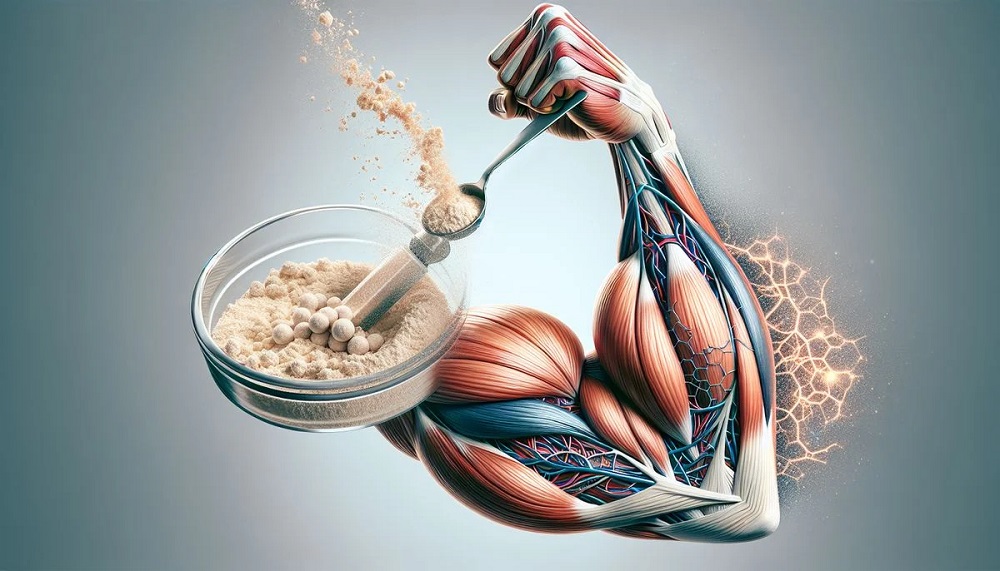
Skeletal muscle is a dynamic tissue that undergoes a continuous cycle of degradation and renewal. Whether through intense resistance training, endurance exercise, physical labor, or daily movement, physical activity places stress on muscle fibers. This stress causes microscopic tears in the structural proteins that allow muscles to contract.
The human body repairs this damage through a complex biological process that rebuilds muscle tissue to be stronger and more resilient. Dietary protein plays an indispensable role in this repair mechanism. Serving as the primary structural building block for tissue synthesis, protein provides the raw materials necessary to repair damaged fibers, minimize post-exercise soreness, and support long-term muscular health.
The Physiology of Muscle Damage and Repair
To understand how dietary protein supports muscle recovery, it is helpful to look at what happens at the cellular level during physical exertion.
Exercise-Induced Muscle Damage
When you perform strenuous physical activity—particularly movements involving eccentric contractions, where muscles lengthen under tension—microscopic disruptions occur within the contractile units of muscle fibers, known as sarcomeres. This process, known as exercise-induced muscle damage, compromises structural integrity, triggers localized inflammation, and temporarily reduces muscle force production.
The body responds to this localized micro-trauma by activating an inflammatory response. Immune cells flood the damaged area to clear away cellular debris, signaling specialized stem cells known as satellite cells to begin the repair process.
Muscle Protein Turnover
Muscle tissue exists in a constant state of turnover, balanced between two opposing biological processes: muscle protein breakdown and muscle protein synthesis.
- Muscle Protein Breakdown: The enzymatic degradation of existing muscle proteins into individual amino acids, which accelerates during physical exertion.
- Muscle Protein Synthesis: The biochemical process where the body constructs new muscle proteins to repair, reinforce, and expand damaged muscle fibers.
When muscle protein breakdown exceeds muscle protein synthesis, net muscle loss occurs. Conversely, when muscle protein synthesis outpaces muscle protein breakdown, the body enters an anabolic state, enabling muscle repair, recovery, and hypertrophy.
Amino Acids: The Fundamental Building Blocks
Proteins consist of organic compounds known as amino acids, linked together in peptide chains. When you consume dietary protein, your digestive system breaks these chains down into individual amino acids, which enter the bloodstream to repair damaged tissues throughout the body.
Essential versus Non-Essential Amino Acids
The body uses twenty standard amino acids to construct human tissue. These are divided into two main categories:
- Non-Essential Amino Acids: Eleven amino acids that the human body can synthesize internally from other compounds, meaning they do not need to come directly from food.
- Essential Amino Acids: Nine amino acids that the human body cannot produce on its own. These must be obtained through your daily diet.
For muscle repair to occur efficiently, all nine essential amino acids must be present in sufficient quantities in the bloodstream simultaneously.
The Trigger Role of Leucine
Among essential amino acids, the three branched-chain amino acids—leucine, isoleucine, and valine—play a particularly direct role in muscle metabolism. Leucine stands out as the primary biochemical trigger for muscle protein synthesis.
Leucine acts as a molecular key that activates the Mechanistic Target of Rapamycin pathway, an intracellular signaling network that initiates protein synthesis within muscle cells. Consuming a protein source rich in leucine ensures that this signaling pathway is fully activated to begin tissue repair.
Optimizing Protein Intake for Muscle Repair
Maximizing muscle recovery requires looking beyond total daily protein intake; timing, distribution, and protein quality also play major roles in how effectively your body repairs muscle tissue.
Determining Daily Protein Requirements
Sedentary individuals require a baseline protein intake to support general health and prevent deficiency. However, physically active individuals, athletes, and those engaging in strength training require significantly higher amounts to support tissue repair.
- Sedentary Baseline: Approximately zero point four grams of protein per pound of body weight daily.
- Active Adults and Endurance Athletes: Approximately zero point six to zero point eight grams of protein per pound of body weight daily.
- Strength and Power Athletes: Approximately zero point seven to one gram of protein per pound of body weight daily.
Protein Quality and Bioavailability
Not all protein sources deliver amino acids with equal efficiency. High-quality complete proteins contain all nine essential amino acids in proportions that closely match human needs.
Animal-derived proteins—such as chicken, turkey, beef, fish, eggs, and dairy products—are complete proteins with high bioavailability and rich leucine content.
Plant-derived proteins—such as lentils, beans, chickpeas, quinoa, hemp seeds, and tofu—offer substantial nutritional benefits. While some individual plant sources may be lower in specific essential amino acids, combining diverse plant protein sources throughout the day ensures a complete amino acid profile for muscle repair.
Protein Distribution and Timing
The body cannot store excess amino acids for later tissue construction in the same way it stores carbohydrates as glycogen or extra energy as fat. Therefore, spreading your protein intake evenly across three to five meals throughout the day produces better muscle repair outcomes than consuming the majority of your daily protein in a single heavy meal.
Consuming twenty to forty grams of high-quality protein every three to four hours maintains elevated plasma amino acid levels, keeping the body in a sustained state of muscle protein synthesis.
While the concept of a strict thirty-minute post-workout anabolic window has been overstated, consuming a protein-rich meal or shake within one to two hours following intense exercise remains an effective strategy to kickstart the muscle repair process.
Beyond Exercise: Protein’s Role in Injury and Aging
The importance of protein in muscle repair extends far beyond athletic recovery; it plays an equally critical role in injury rehabilitation and healthy aging.
Muscle Recovery During Injury Rehabilitation
When an injury forces a limb or body part to be immobilized in a cast or brace, muscle protein breakdown increases rapidly while muscle protein synthesis drops. This imbalance leads to rapid muscle atrophy and loss of strength.
Maintaining adequate or slightly elevated protein intake during injury recovery helps minimize muscle loss, preserves tissue function, and accelerates rehabilitation once physical therapy begins.
Combating Age-Related Muscle Loss
As humans age, the body becomes less responsive to dietary protein signals, a physiological condition known as anabolic resistance. Aging adults require higher per-meal doses of protein—along with regular resistance exercise—to stimulate muscle protein synthesis as effectively as younger individuals. Ensuring adequate protein intake helps older adults maintain muscle mass, preserve physical mobility, and prevent age-related sarcopenia.
Frequently Asked Questions
Can the human body absorb more than thirty grams of protein in a single sitting?
Yes. The digestive system can absorb and utilize virtually all the protein you ingest, regardless of meal size. However, there is an upper threshold for how much protein can be used specifically to stimulate muscle protein synthesis in a single dose, usually between thirty and fifty grams depending on body size. Extra amino acids beyond this threshold are used for energy, tissue repair elsewhere in the body, or stored as alternative energy substrates.
Is whey protein superior to plant protein for muscle repair?
Whey protein is an exceptional option for muscle repair because it digests rapidly, possesses high bioavailability, and contains a high concentration of leucine. However, high-quality plant protein blends—such as pea and rice protein combinations—can stimulate muscle protein synthesis just as effectively as whey when consumed in adequate amounts that deliver equivalent essential amino acids.
Does eating protein before bed improve overnight muscle repair?
Yes. Sleep is a prolonged fast during which muscle protein breakdown can exceed synthesis. Consuming twenty to forty grams of a slow-digesting protein, such as casein or a whole-food protein source, shortly before sleep provides a steady release of amino acids into the bloodstream throughout the night, supporting overnight muscle repair and recovery.
How does consuming carbohydrates alongside protein affect muscle recovery?
Consuming carbohydrates with protein stimulates insulin release. Insulin suppresses muscle protein breakdown, helps transport amino acids into muscle cells, and replenishes depleted muscle glycogen stores used during hard workouts. Combining carbohydrates with protein after intense exercise creates an optimal physiological environment for overall recovery.
What happens if you do not consume enough protein after strenuous workouts?
If daily protein intake is consistently insufficient following hard workouts, muscle protein breakdown will outpace muscle protein synthesis. Over time, this leads to persistent muscle soreness, prolonged recovery times, loss of lean tissue mass, increased risk of overuse injuries, and plateaued physical performance.
Can consuming excessive amounts of protein damage healthy human kidneys?
Scientific evidence demonstrates that high protein intake does not harm kidney function in individuals with healthy, normal renal system health. The kidneys adapt naturally to process elevated nitrogen waste from protein breakdown. However, individuals with pre-existing kidney disease or compromised renal function should consult a qualified medical specialist regarding their specific protein limits.
How does hydration status impact muscle protein synthesis and tissue repair?
Proper hydration is critical for muscle repair. Muscle cells require adequate intracellular water volume to synthesize new proteins efficiently and transport nutrients across cellular membranes. Dehydration impairs nutrient transport, reduces muscle cell volume, increases muscle breakdown rates, and worsens post-exercise soreness.